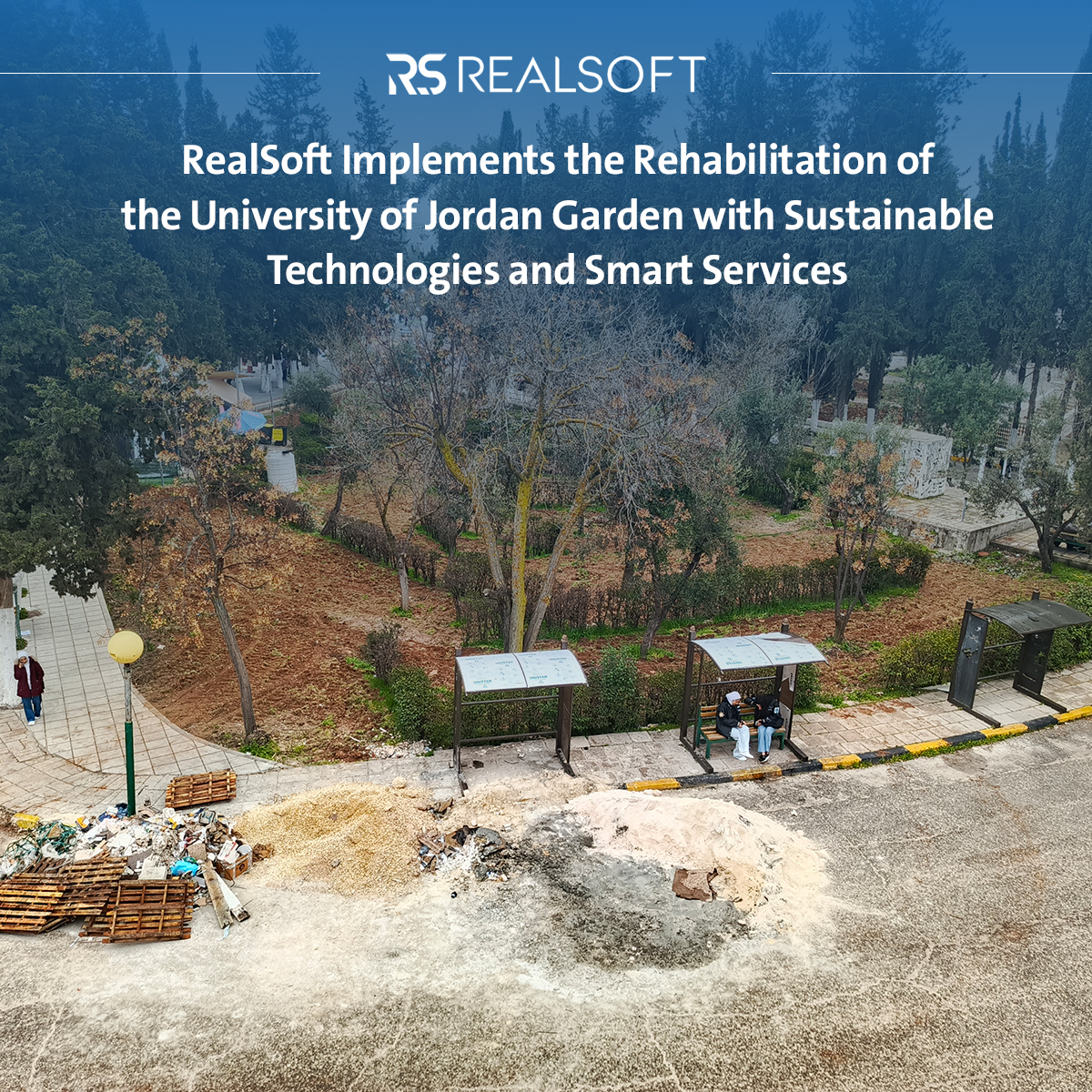
RealSoft Implements the Rehabilitation of the University of Jordan Garden with Sustainable Technologies and Smart Services
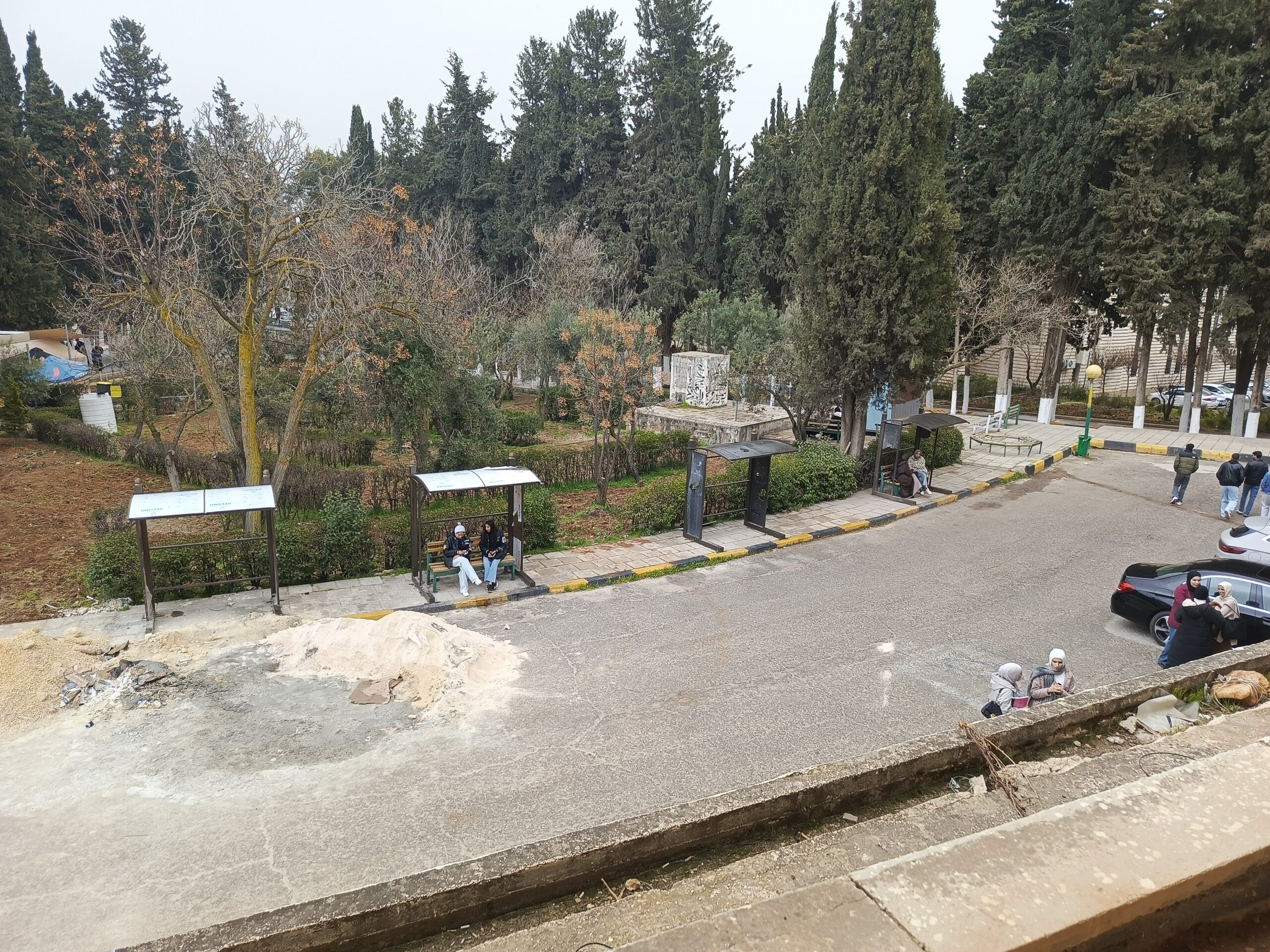
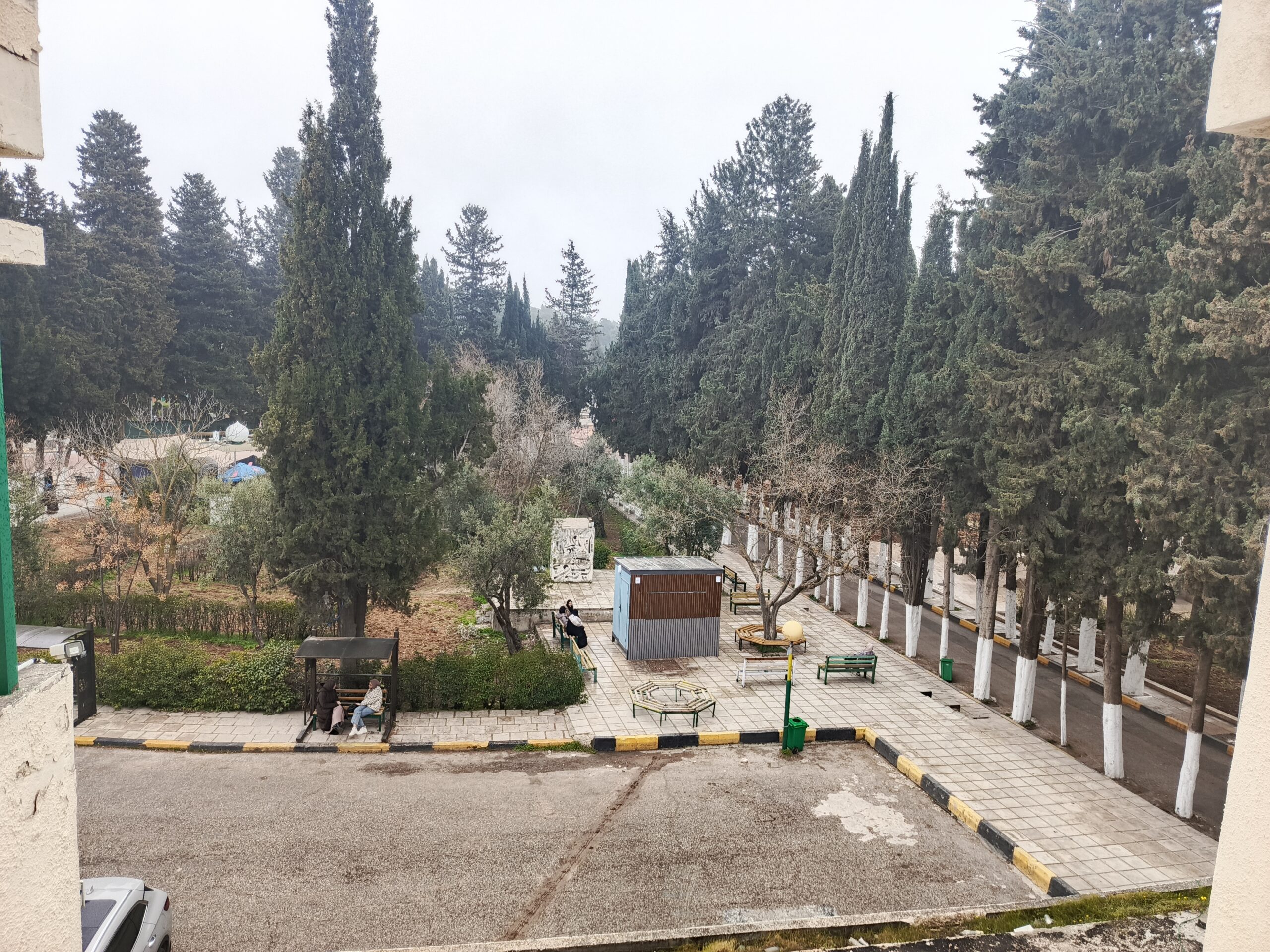
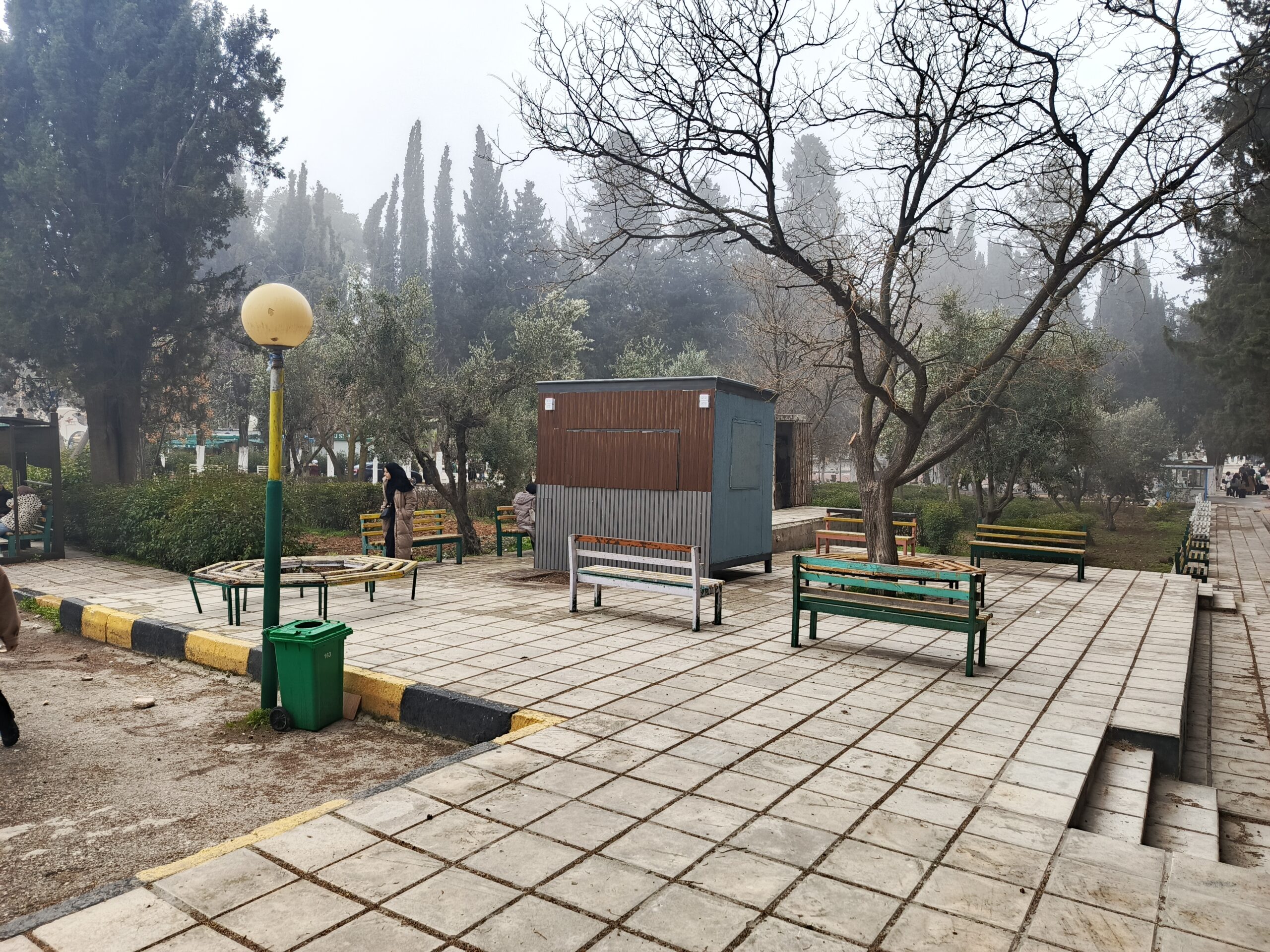
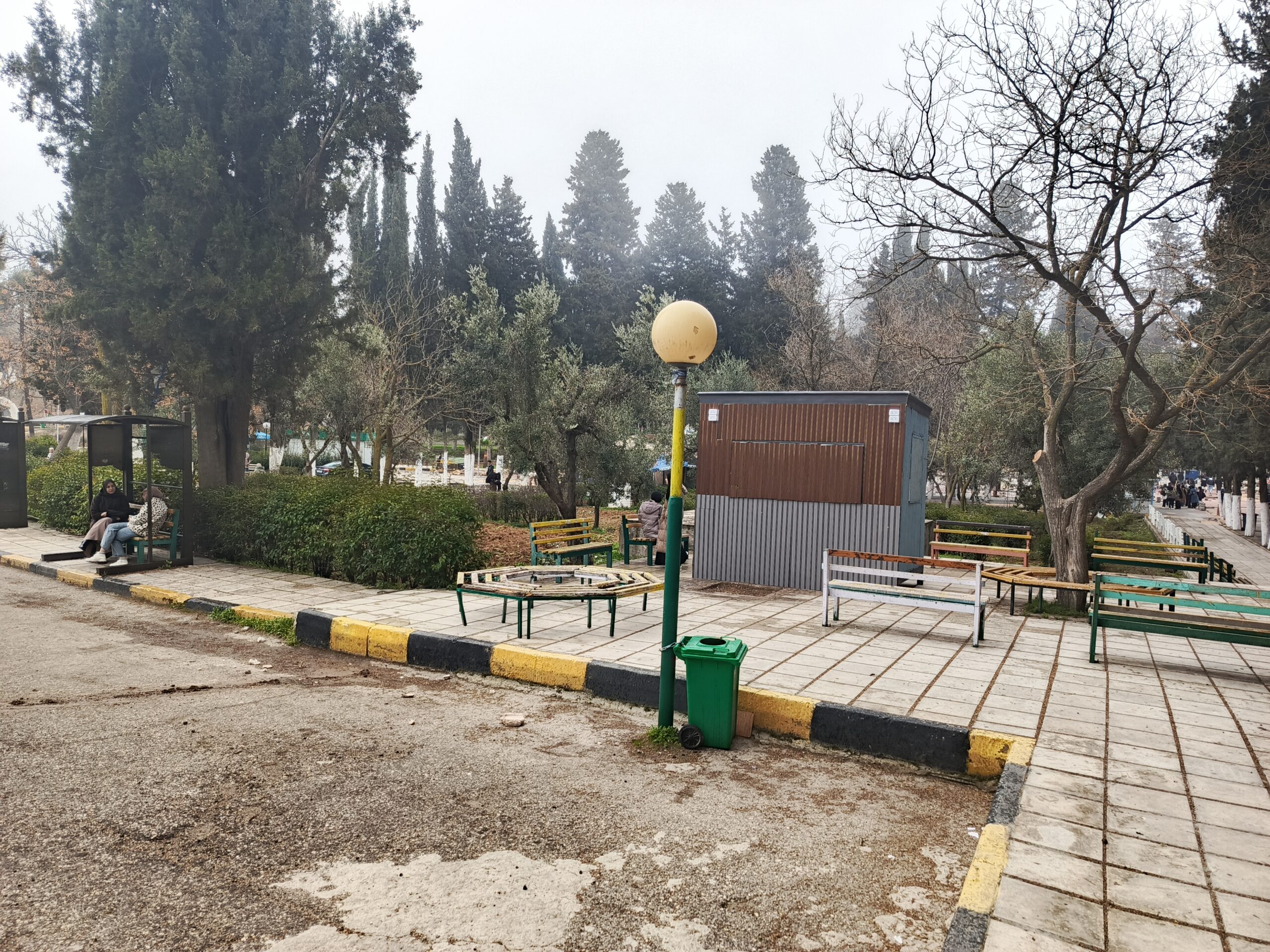
The garden of the Faculty of Foreign Languages at the University of Jordan serves as a daily open space for students, faculty members, and staff, particularly between lectures. According to Dr. Somaya Daoud, Assistant Dean for Quality Assurance and Local Accreditation, the current green area lacks internal seating, lighting units, and service facilities, limiting students’ ability to fully utilize the space and prompting them to remain around its perimeter.
In response to this need, the University of Jordan signed a cooperation agreement with RealSoft Advanced Applications to rehabilitate the garden, with implementation works commencing immediately. The initiative marks the first project of its kind in which a private company undertakes the redevelopment of a university garden. The project covers an area of approximately 1,500 square meters and is scheduled for completion within 60 days.
The rehabilitation includes transforming the garden into a sustainable, daily-use space through the installation of off-grid solar panels, mobile charging stations, Wi-Fi connectivity, lighting units, and seating within the green area. The project also incorporates a water- and energy-efficient irrigation system to ensure sustainable operation of the garden’s facilities.
Dr. Daoud noted that providing a properly equipped green space within the campus environment contributes to psychological well-being, which in turn supports academic performance and student life by offering a setting for reading, social interaction, and potential outdoor activities.
The garden is located to the left of the university’s main gate, after the Presidency Building, and is directly connected to the Clock Tower—one of the campus’s central landmarks. The site also holds historical value as part of the original area where the university was established in the 1960s.
Commenting on RealSoft’s role, Dr. Daoud stated:
“Words of appreciation are not sufficient to express our gratitude to RealSoft for this contribution. I personally convey the thanks of the University President, Dr. Nathir Obeidat, to the Chairman and partners of RealSoft for their support of the project and for the constructive cooperation demonstrated throughout the coordination and agreement-signing stages. The company showed clear commitment to understanding the university’s requirements and implementing the agreed specifications for the garden’s rehabilitation. This initiative reflects RealSoft’s commitment to community support and its contribution to one of the country’s leading public institutions. The project represents a practical model of collaboration between the private sector and educational institutions, translating agreements into tangible implementation on the ground. We hope this will extend to future initiatives.”
For his part, Eng. Ammar Al-Sajdi, General Manager of RealSoft, stated that the company maintains ongoing cooperation with the University of Jordan and other higher education institutions across the Kingdom. Mr. Al-Sajdi noted that RealSoft employs number of graduates from Jordanian universities in the fields of information technology and data management solutions. Mr. Al-Sajdi also added that the garden rehabilitation project aligns with the company’s approach to supporting academic environments that contribute to preparing national talents, by helping provide a space that integrates physical infrastructure with modern technologies to enhance the student experience on campus.
The project aligns with the university’s broader efforts to upgrade its internal and external infrastructure. In recent years, the university has modernized classrooms and buildings, extending development to outdoor spaces. The rehabilitation of the Faculty of Foreign Languages garden represents the first practical implementation of this type of collaboration between the university and the private sector in developing campus gardens. It also reflects RealSoft’s continued contribution alongside its core work in technology systems and data solutions, through initiatives that support educational environments integrating infrastructure with smart services.